An Ode to the Black Women Writers Whose Words Heal
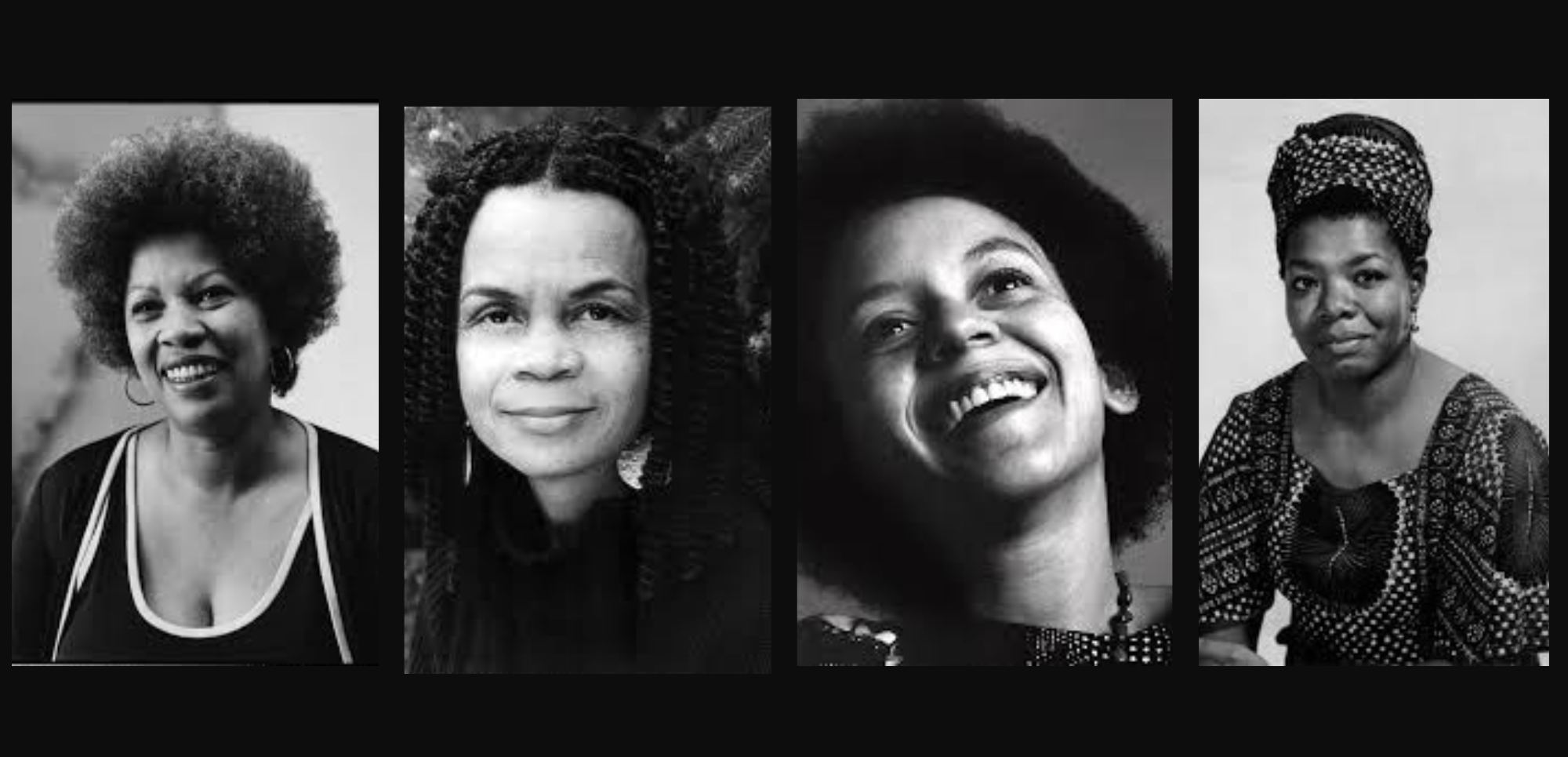
Pictured: Toni Morrison, Sonia Sanchez, Nikki Giovanni, Maya Angelou
This Women’s History Month, I’m inspired to celebrate the women writers whose words laid foundational seeds that propelled me into my journey of seeking out words for healing. Their masterful word styles model for me what it means to be unapologetically committed to writing and established my love of words. Their crafting of ideas and creative connections stirred something in my belly, which propelled me to seek out more words. I've learned from them that perfection is not the goal. Instead, they model the rawness that I strive for in my own writing process. In all, they demonstrate the courage to write what needs to be said, despite how one’s intended audience may receive it. As I write this, I realize that the lessons from their texts have taken root and are flourishing in this season of my life. I feel the urgency to write, share, and release the God-given ideas I have held delicately within. It is my right and responsibility to say the unsaid. There is bravery in writing. When we put words on paper, we are revealing a little of ourselves and establishing a vulnerable connection with our readers.
Black women writers have been my anchors and teachers. As a Black woman living in America, they provided me with the foreshadowing of life events to come, and they created the road map and markers to navigate such a life. The revelations in their texts, whether overt or covert, are relevant. As I re-commit myself to my writing process, I must first start by honoring the writers who shaped my journey.
Toni Morrison’s Beloved mended me. The deep-rooted love and grief experienced by the main character, Sethe, in my opinion, is unparalleled. Readers of the book learn how Sethe demonstrates the ultimate, unconscionable act of sacrifice when she opts to free her child via death instead of her living in slavery. Beloved, the daughter returned from the dead, acts as a symbolic mirror of the traumas associated with Sethe’s past. To me, Beloved, as the character, reminds readers that what we don’t strive to heal will haunt us. I finished the book, grounded in the notion that unhealed traumas change the trajectory of life. Sethe attempted to pacify Beloved by giving her everything she desired. If it weren’t for a Black women led community intervention, Sethe would have died trying to heal her daughter instead of herself. Many of us have experienced unimaginable traumas. We should consider the peace that resides on the other side of pain and engage in the necessary steps to move forward in healing.
Sonia Sanchez’s Haiku [for you] softened me. This particular text stayed inside me until this season in my life, when I can truly walk in this type of love. In my youth, it provided an internal audit of what love is in comparison to external examples of what love is not. Sanchez’s text was my checklist of what one may exhibit when loved correctly. Today, this text shows up as a reminder that it’s ok to put the wall down and embrace soft, steady love. The haiku is simple yet deep, revealing the intricate nature and humanity of what it means to love. The love Sanchez speaks of is mature, hard, and real.
Nikki Giovanni’s Nikki Rosa emboldened me. The perceived challenges of Giovanni’s childhood did not align with her lived experience. She challenges the notion that one must grow up with worldly luxuries to exhibit joy. Society has a way of rewriting, erasing, and/or stepping over one’s existence. However, the bold statements of Nikki Giovanni remind me that no one can define me by my past or store away my existence into a box they see fit for me. I will bask in the memories of my humble beginnings, growing up as a first-generation African American, as my parents are Sierra Leonean immigrants. I will embrace the memories with my late mom, who did whatever was necessary to provide for her three children as a single mother. I will allow myself to get lost in the joy-filled moments of my childhood, acknowledging that every moment worked toward my growing into the woman I am today.
Maya Angelou’s Still I Rise restored me. Life has a way of knocking you down when you least expect it, and sometimes these hardships are experienced at the hands of people we once viewed as our allies. Angelou taught me that in exhausting times or when people attempt to spread counter-narratives about my character, it is my responsibility to rise above the challenges. Angelou’s Still I Rise is a representation of this idea. In life, people may speak ill of you, attempt to defame you, discredit your ambitions, or shame you for walking in your purpose. But Angelou’s poem is our call to fly above the negative voices of those who want to see us down and calls us to remember who we are in the face of adversity. She calls us to rise.
There are so many other writers whose words impact me. Zora Neale Hurston, Gwendolyn Brooks, bell hooks, and Alice Walker, your words are remembered and celebrated.
Today, I choose to surrender the anxiety that may show up when I pick up my pen to write and remember the women who have paved the way for Black women who desire to write authentically. Because of them, I choose to be free and write.